Fears and phobias
- specific phobias, e.g. heights or spiders
- fear of public speaking
- fear of driving
Wrocław · online sessions
I work with people ready to step out of patterns that keep coming back despite many attempts. I help you reach the source of tension, anxiety and inner blocks — calmly, mindfully and without pressure.

A knowledge-based approach
Clinical hypnosis has been studied in medicine and psychology for decades. Results depend on the problem, the goal of the work and individual predispositions, so there is no single outcome that applies to everyone.
A historical 1970 review by Alfred A. Barrios compared the reported outcomes of three approaches. The comparison is often cited, but it should be read in the context of the methodology and knowledge available at the time.
Source: Psychotherapy, 1970These historical figures are not a promise of results. Every process, its length and its effect are individual.
Areas of work
Instead of fighting the symptom alone, we look for what triggers the pattern and keeps it running on autopilot.
Don’t see your topic here?
Ask during the intro call
How I work
First we set the goal, then we choose the tools and the pace — so the change is tangible and sustainable in everyday life.
We look for the origin of the problem and the situations surrounding it. We identify unsupportive beliefs, patterns and secondary gains.
We work with the emotional imprint of the event and the inner child to neutralise the causes of the entrenched problem.
We sort through accumulated emotions, work with forgiveness and look for healthy mechanisms of regulation.
We introduce supportive beliefs and patterns, then anchor them in a vision of everyday life free of the problem.
About me
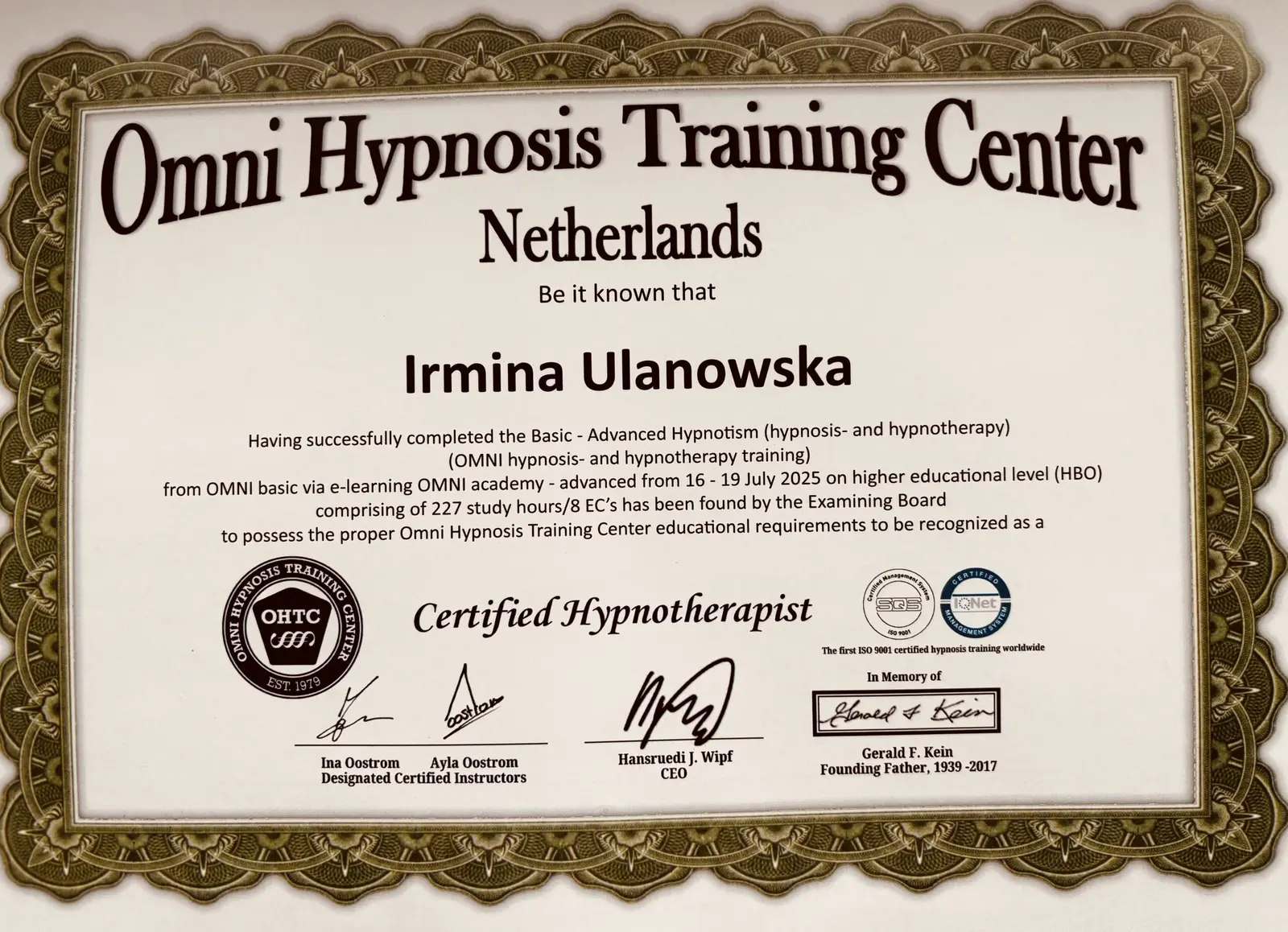
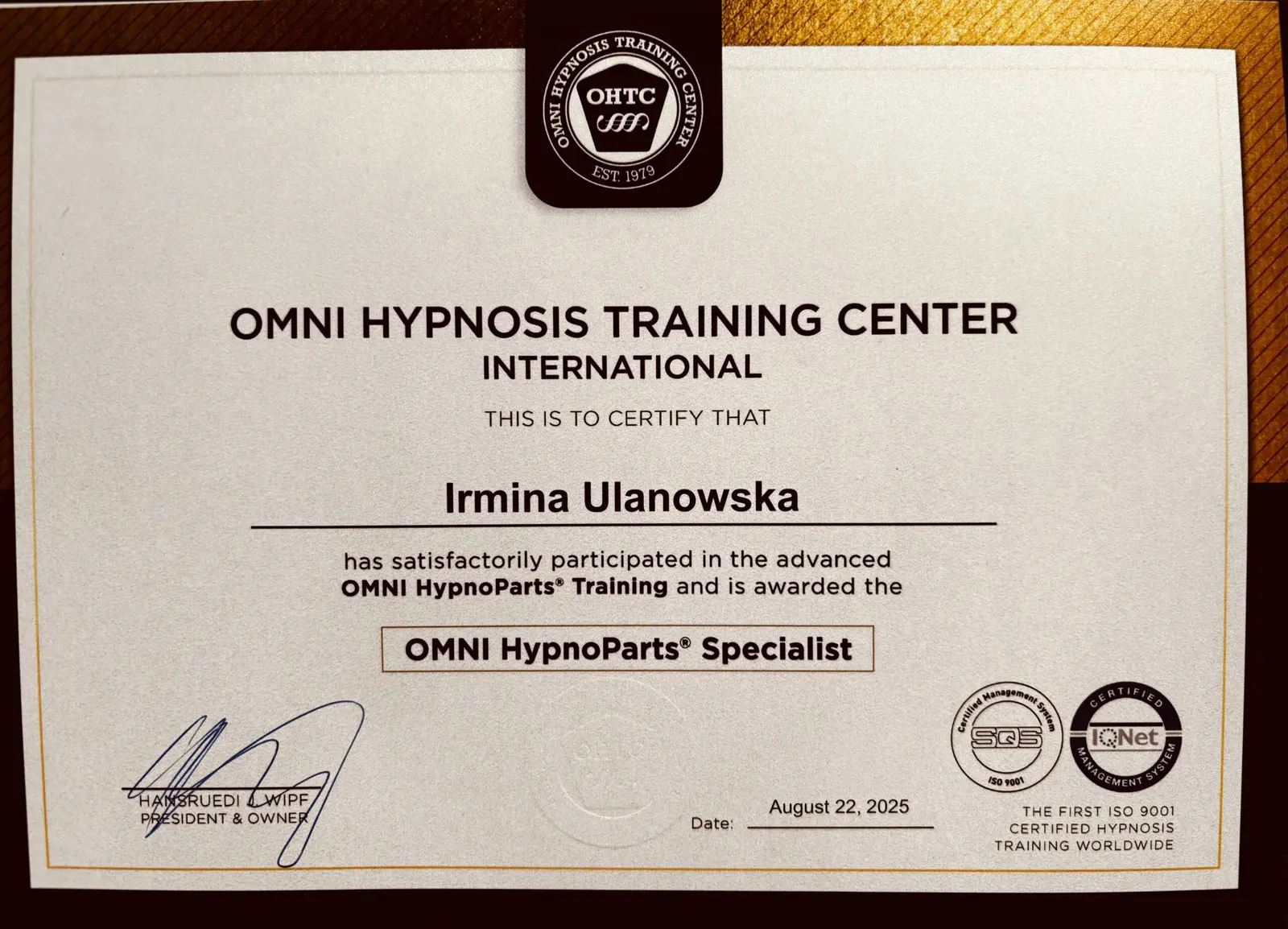
My name is Irmina Ulanowska. I am a hypnotherapist certified by the OMNI Hypnosis Training Center — an American school with ISO 9001 certification.
I come from south-eastern Ukraine. I completed my economics and master’s studies in Wrocław, and for years built a career in IT as a data analyst. In parallel — for nearly 20 years — psychology, working with the mind and a deeper understanding of people were my greatest passion.
In time I felt I wanted to work directly with people and genuinely support them through change. Searching for my own answers, I found hypnotherapy. It is a tool for working with automatic patterns, beliefs and bodily reactions that often operate outside awareness.
Today I support people in regaining agency, calm and a sense of influence over their own lives — by changing what runs “on autopilot”.
Questions? See the FAQ
Growth and experience
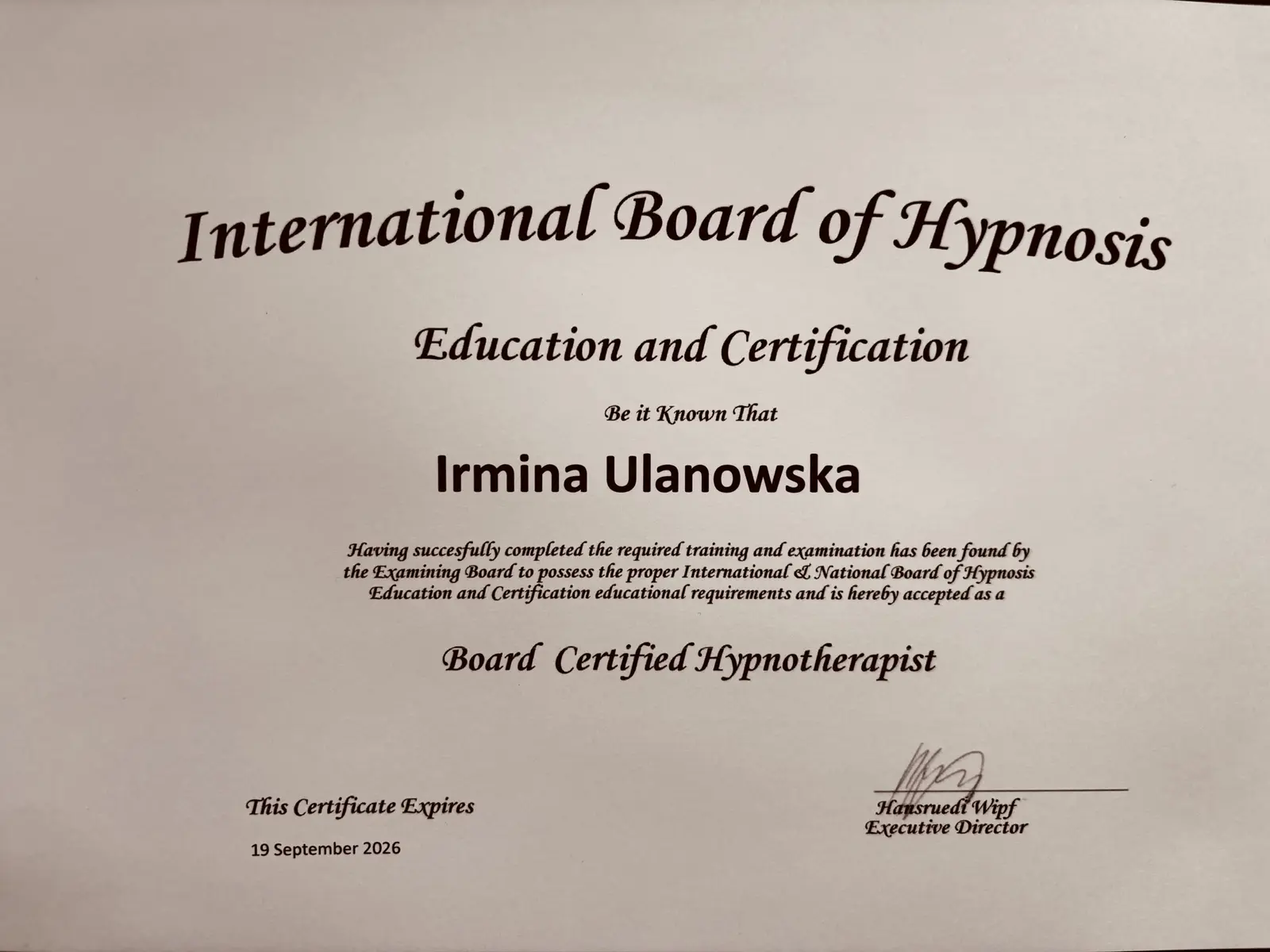
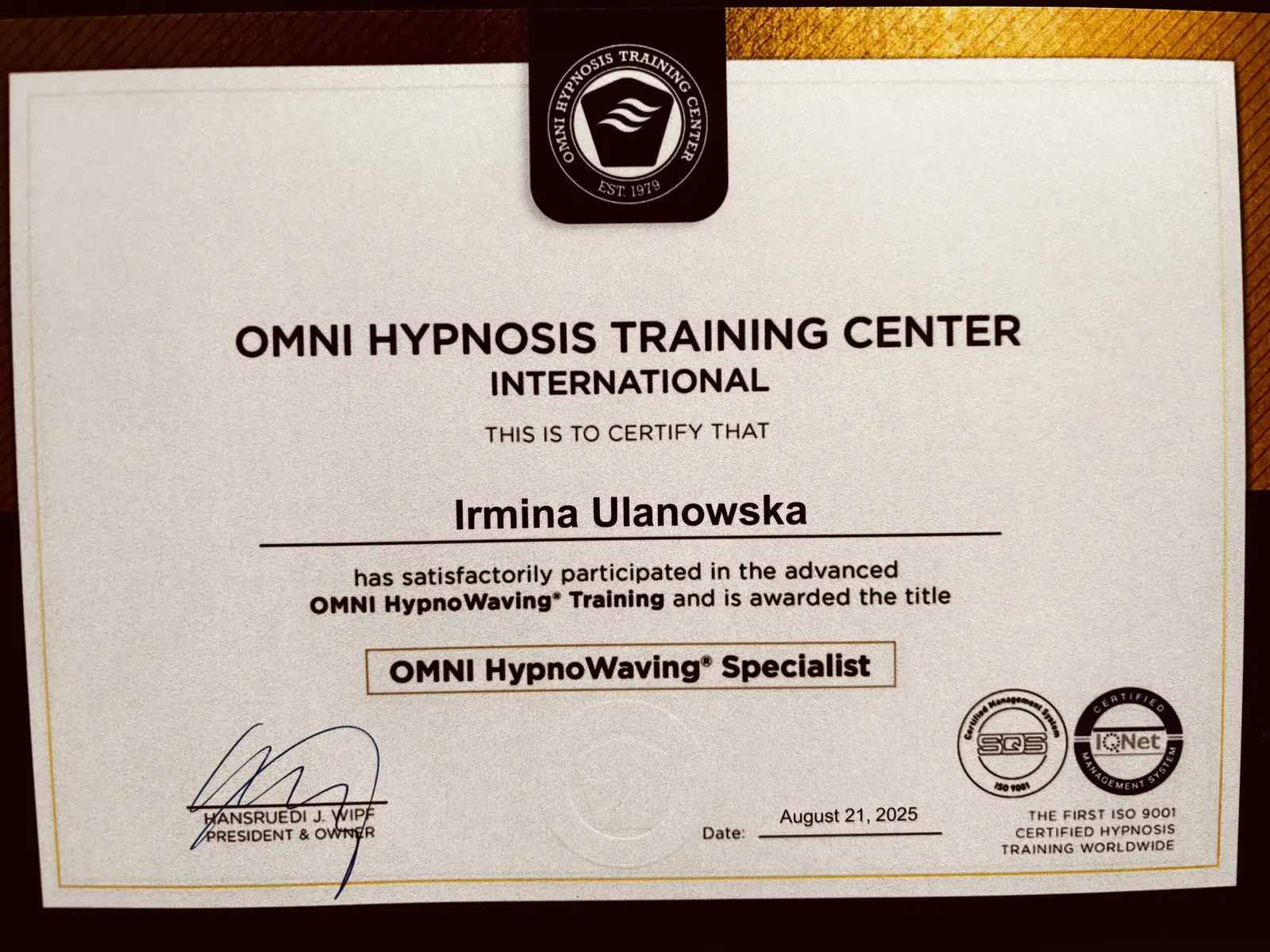
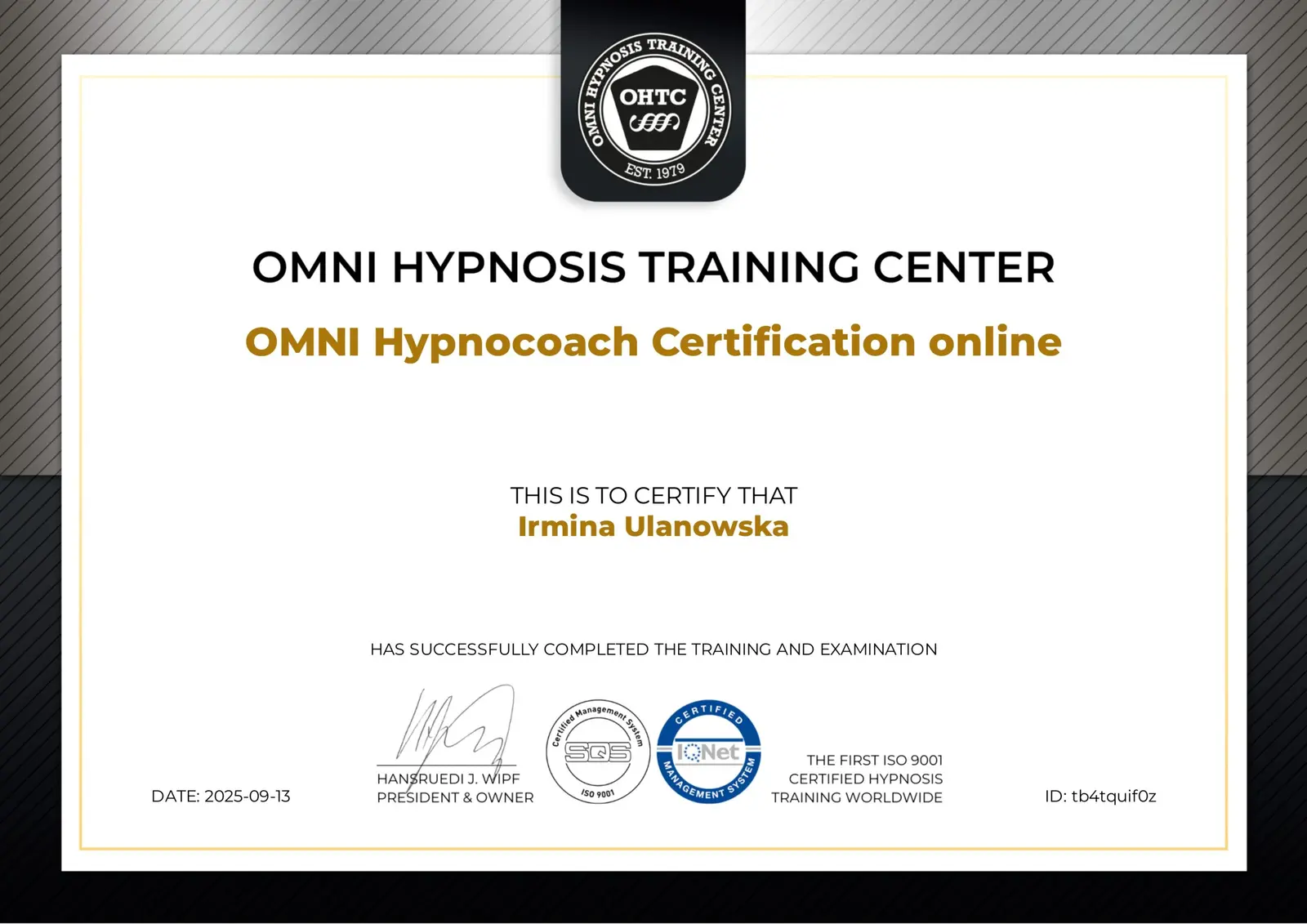
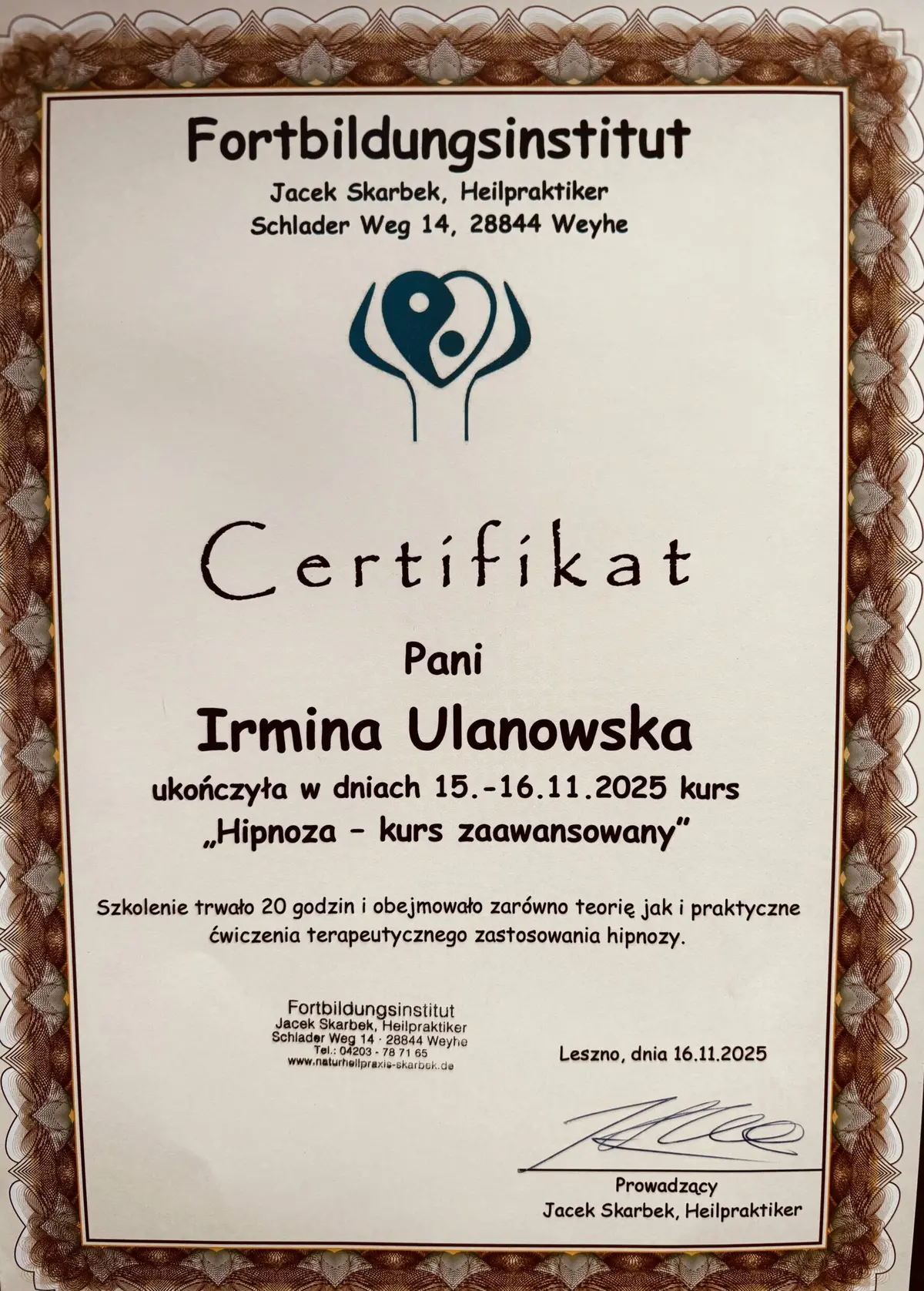
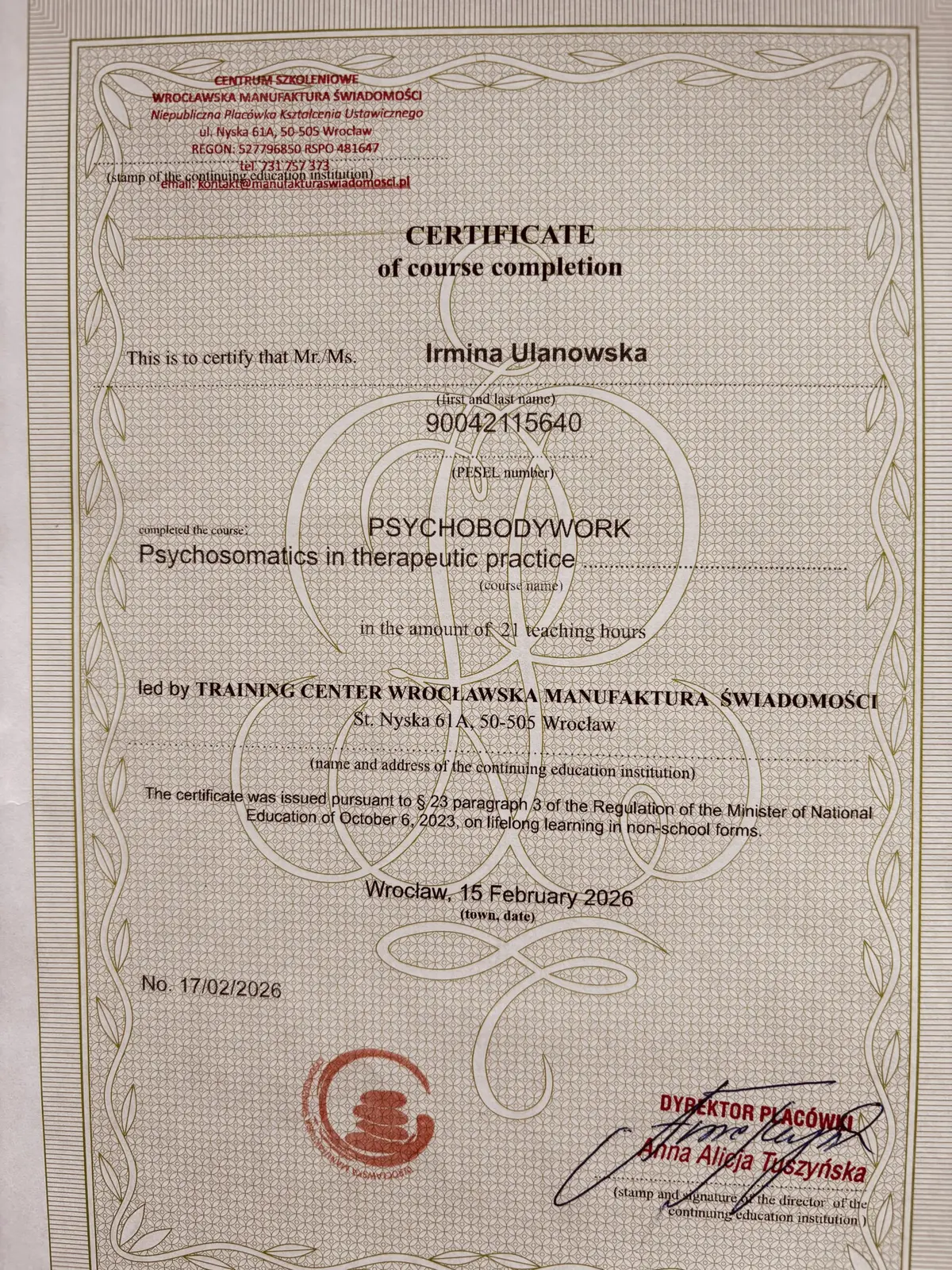
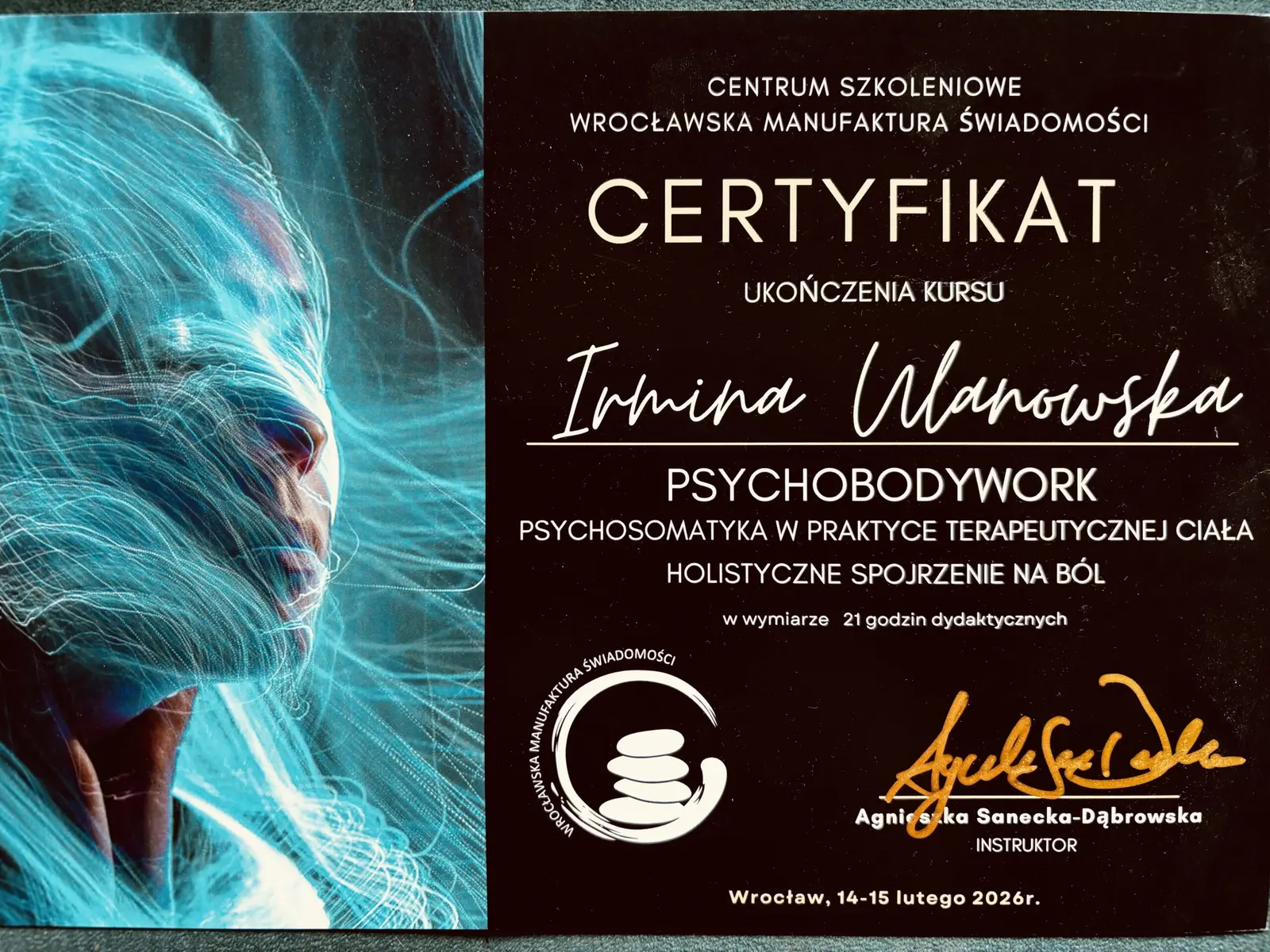
The training, the practice and the people with whom I share a commitment to responsible work with hypnosis.
Good to know
If you are not sure whether hypnotherapy is right for your situation, we can talk it through calmly during the intro call.
Let’s talkNo. In hypnosis you don’t “drift away” as in sleep — it is rather a state of relaxation and focus in which you have greater access to emotions, memories and associations. You usually stay in contact with what is happening and can respond to the therapist.
No. During a session you remain aware and in control. You can speak, open your eyes, stop the process or change position. My role is to be your guide, not to take over the wheel.
No. A suggestion can only be accepted when it is aligned with you, your goal and your values. In any other case the critical mind will reject it. Hypnotherapy is not about steering a person, but about agreeing on change.
Every process is unique: sometimes one session is enough, other times a few are needed — about three on average. Sometimes a refresher session is useful after a while. Hypnotherapy is a short-term therapy, but the pace and durability of change are individual.
Hypnotherapy is not magic and requires commitment. If you don’t want change, come under pressure from others, or hold on to hidden gains tied to the problem, the process may not bring the expected result.
In hypnotherapy we work with automatic reactions, emotions and beliefs that often operate outside conscious attention. Through focus and imagination you can look at their sources and practise new responses.
The goal is not merely temporary symptom management, but understanding the mechanism of the problem and building more lasting change. Results depend on the person, the problem and their commitment.
Usually around 1.5–2 hours. I tailor every session individually and never end a meeting in the middle of an important process. After coming out of trance we leave time to discuss the experience and next steps, so a meeting can sometimes run longer.
Hypnotherapy is not advisable for, among others, people with certain serious psychiatric disorders, intense borderline personality symptoms, epilepsy or intellectual disability, people under the influence of psychoactive substances, and women in the first trimester of pregnancy. In case of illness, pregnancy, psychiatric treatment or any doubts, first consult your doctor about taking part.
In publications and interviews, hypnosis has been linked to creative work, sport, focus and coping with difficult experiences. Among those mentioned are:
Contact
Write to me. I will reply and suggest a time for a free 15–20 minute intro call.
Hypnotherapy does not replace medical or psychiatric advice. In a life- or health-threatening situation, call 112.